Ship traffic and seabirds


Did you ever think about the subject how ship traffic influence seabirds?
How ecosystems are affected by ships? We don't consider now how river and terrestrial areas are influenced by pollution. Increasing activities by humans mean that governments have to plan spatial schemes for conservation of certain species living at sea.


Ship traffic is increasing and that affect live of seabirds. People doesn't understand that they influence the way birds live at sea. Lack of understanding can cost many lives of rare species.
There have to be a plan for preserving biodiversity, some rules have to be applied. Human's nature is to think only for himself. Organizations are using aerial surveys and create disturbance experiments to gather data how this will affect live of the seabirds in conditions close to those created by passing ship traffic. Some things like losing habitat, flight reactions.


For example test showed that these birds were trying to avoid places with high shipping intensity. But other birds like sea duck differed a lot. Flush distance was positively connected to flock size.
A lot of seabirds were examined, the duration of temporary habitat loss was longest for Common Scoters.
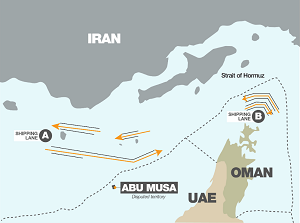
It is discovered that habituation in sea ducks within areas of channeled traffic is common problem. Although, it is under question if habituation to free-ranging vessels is likely to occur, for a reason of their unpredictable nature. It is recommended that spatial planning must aim to channel ship traffic wherever possible to avoid further habitat fragmentation and to allow for habituation, at least in some species. Data gathered from the study on the effects of shipping on other seabird species and during different periods of the year must be done, together with data on the effects of various types of boats, including recreational and fishing vessels.  

Fleet Tracking Monitoring System – seaPro 2000

The fleet monitoring system - seaPro 2000 – is a worldwide fleet management software that becomes an tremendously powerful device for fleet monitoring, scheduling and planning your whole fleet– whether tugs and tenders, trawler fleets, patrol ships or foreign-going merchantmen or boats.

Scalable solutions for fleet monitoring system

Built using the seaPro charting software, and working with a scale of top quality raster and vector cartography, Euronav's AIS live fleet monitoring systems may operate in standalone or networked modes, and can be configured to operate with your existing communications infrastructure.

Worldwide capability of seaPro 2000 - the AIS live fleet management system supports the following high-quality electronic charts:
  • Livechart 'B' (vector)
  • S-57 ENC (vector)
  • ARCS (raster)
  • Seafarer (raster)
  • BSB (raster)
The vessel tracking system may also be incorporated with other patterns that are available in the seaPro family range of products to make systems very suitable for other activities such as emergency reflection and fisheries monitoring.

The fleet monitoring server receives and controls the information flows to the VCI, stores received information, and serves the information to the AIS live ship tracking workstations.

The AIS live fleet monitoring workstation is used by the operators to view ships information using digital charts, the operator may also operate polling rates/areas etc.

The 3 software elements might be on a single computer, on distinct computers on a local area network, or spread across the worldwide using the internet, which is made possible by using the TCP/IP standard protocol.

The system might be extended from a single VCI, to multiple VCI's, from a single workstation to workstations spread all over the world. If required there is an option to have multiple servers (on distinct websites) to give automatic switch over if there is a system failure in fleet monitoring systems.

AIS live fleet monitoring system

When integrated with the based on the coast fleet monitoring systems (FMS), or in other words said vessel tracking system (VTS) AIS technology secures a mighty tool for AIS live fleet monitoring and controlling all the movements of the fleet through limited ports and waterways. 
The AIS may increase traditional radar-based vessel tracking system installations, securing an AIS “overlay” on the radar image, or may secure a shore-effective alternative in places where it is not realizable to determine radar-based fleet management systems. When integrated with radar, the AIS live technology may assure permanent coverage, even when the radar image is corrupted by heavy precipitation or other intervention.

The AIS channels might be used to send harbour database, pilotage, berth assignments, course, speed, ETA, information about the shipping agency, managers/owners, tides and currents, allerts to mariners and other information from coast to vessel, as well as vessel-to-vessel and vessel-to-coast AIS notifications. It is also possible for the AIS live fleet monitoring system to propagate the full port view to all fleet in the region, so the masters and pilots all can share the same “big view.” 
The vessel tracking center may take control over the allocation of timeslots for AIS messages to assure maximum exchange of information within the coverage region. Special dedicated channels can be concstructed for local-area AIS maneuvers. The AIS equipment positioned on the vessel boards is going to have the capability to be moved to distinct channels automatically when directed by the shoreside fleet monitoring controller.

Ship Traffic Managing

Ship traffic services are for managing the traffic of the ships on marine routes, reccomending the best courses for a ship and making sure no 2 vessels run into each other.

What is ship traffic?

All this and much more making sure that maritime data invariably flows smoothly over all marine courses and ship traffic is being organized. As included by International Maritime Organization (IMO), Vessel Traffic Services additionally deal with organizing marine routes for more safety and efficiency.


History


The idea of ship traffic like service 1st came into being with constantly increasing demand for a single organisation to deal with the traffic. As marine routes became important and crowded too, a lot of accidents on these over worked routes went up too. The current shape of VTS first emerged in the port of Liverpool in 1949. From that point, it started spreading through whole Europe.

In United States, Coast Guard 1st took the power of managing ship traffic. After all, VTS as we know it emerged 1980s.

Nevertheless, the 1stt radar surveillance in United States was created in 1950 at Long Beach, California. Authorities identical to IMO maintain ship traffic servises through proper personnel and VTS areas in distant parts of the world.


Why managing the ship tracking is important?

Importance of Vessel Traffic services can be better catched from the functions it perform in managing ship traffic. The key point of VTS is for managing vessel traffic. This aids making ships safe, ahead with helping accomplish max traffic flow from any given route.

Important marine info is available for all mariners at all times. It even aids in making a tab on movement of unauthorized cargo movements, making waters safer and more predictable. After all, one of the most valuable roles of these services is to serve as a vessel finder. The infor received, stored and replayed by different sensors help in keeping a tab on movements of ship tracking at all time.

Types of services for tracking a ship

Vessel traffic services above all include devices to gather and transmit maritime infor which includes traffic images. This info is after transmitted to different ships in a given VTS zone. This helps the ships's captains to decide for the navigation and the route for the ship. Various devices have practical use of gaining and transmitting this info.

Monitoring the ship traffic?

Maritime agencies, governments and institutions need reliable knowledge about what really happens at sea. The reason is to implement their effective polices. 

Evidence-based information is, for example, required to successfully manage the marine environment. In general, there is a growing demand for an accurate picture of maritime activities. Port operators want to know the location of ships which will arrive from other parts of the world, so that they can better plan their operations. Customs authorities want to know the location of ships carrying their cargo freight. EU Member States are the main stakeholders. They need to ensure that cargo and any other type ships in and around EU waters satisfy environmental and safety requirements.

Tracking cargo ships

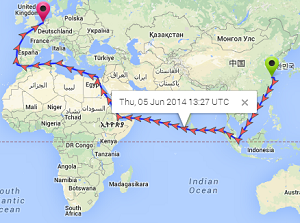
Cargo ship tracking is the ability to trace goods, their containers, and their conveyances from the point of origin to their destination. Tracking is increasingly associated with information transfer using smarter tools such as AIS data.

Tracking Technologies can be used as a solution for tracking, tracing, messaging and security – operating worldwide, 365 days-a-year. It provides seamless worldwide coverage for the remote tracking of container ships, whether in port or on passage in any ocean.

With improving safety at sea and increasing operational productivity becoming significant challenges in the maritime industry, ship tracking & monitoring proves to be instrument for ship owners and customers to track their cargo ships and cargo freight. Ship owners tracking the vessel or the customer tracking the cargo freight brings numerous benefits across asset management, logistics planning and security monitoring – to shipping lines, barge and fleet operators, and search & rescue organizations, as well as to harbour authorities, charter companies and individual owners of cargo ships.